STATUS:
LIVE
Loopengers
Product Design
User Flow Mapping
B2B
Framer Development
UI Design
UX Strategy
Translated GitHub specifications into user flows, wireframes, information architecture, and complete product designs.
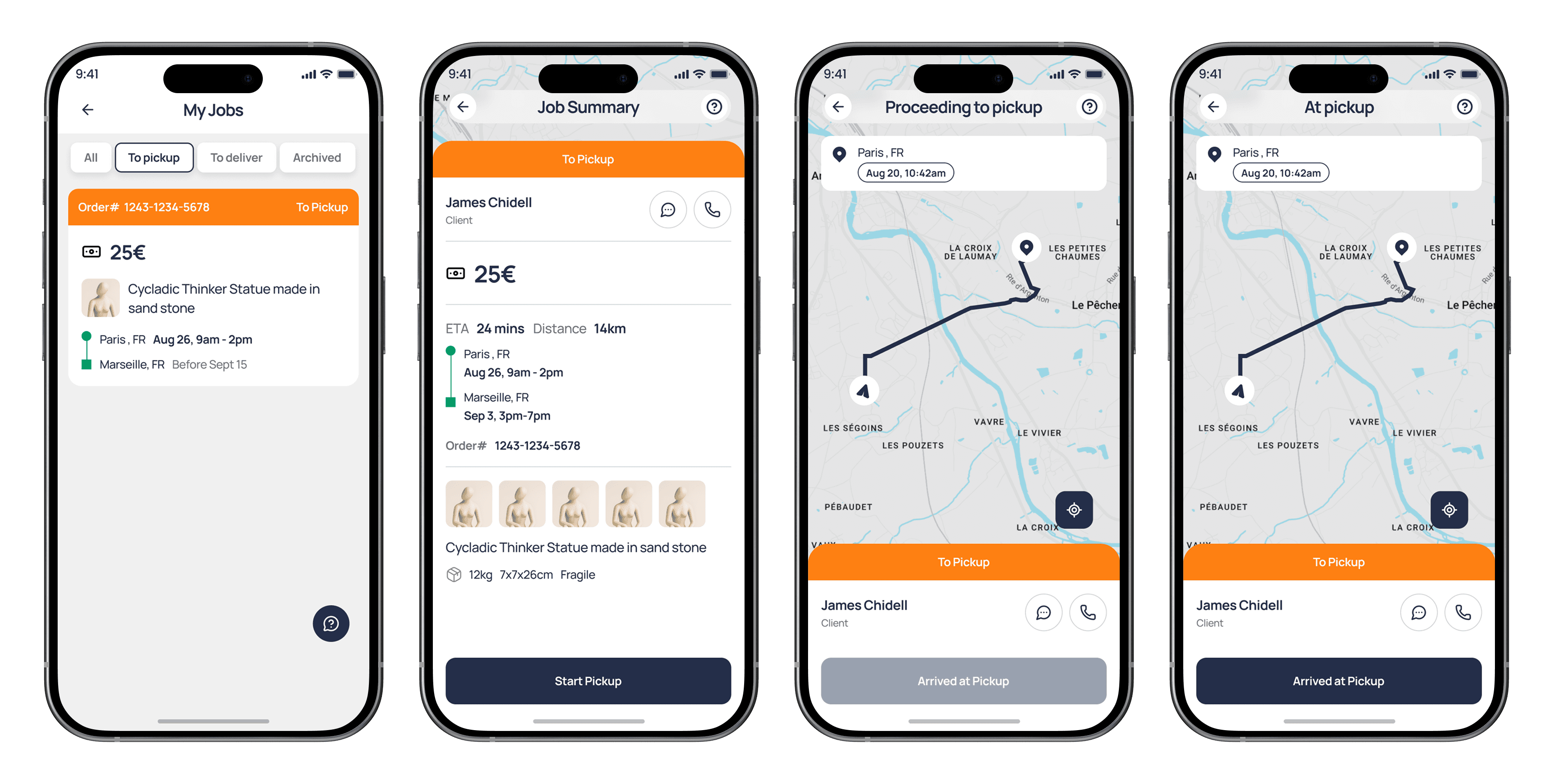
This project involved turning a GitHub v1 specification into a production-ready trucker app that works alongside Snap&Go, the shipper-facing app, through a shared backend. I collaborated closely with the Product Owner, Project Manager, and engineers throughout development. As the project evolved, my role expanded beyond the original scope, creating key experiences that weren't specified—including the home screen, onboarding, and other essential flows needed to make the app usable end to end.
ROLE
Founding Product Designer
DURATION
4 months
TEAM
Product Owner · PM · Engineers
~150
screens, from technical spec
4
months to launch-ready
1
designer, end to end
1
github spec

THE CHALLENGE
Designing a product around complex logistics workflows.
No Design Baseline
Logistics logic existed only as dense technical documentation, requiring a ground-up design system with no existing UX patterns to build upon.
Zero Margin for Error
Small operational mistakes at pickup or delivery carry heavy financial and logistical costs, making accuracy critical under tight time constraints.
Hostile Operating Context
Drivers operate in fast-paced, physical environments: driving, loading cargo, and working in dead zones where complex desktop-style workflows fail.

PROCESS
Shaping the Product from the Ground Up
I began by understanding the GitHub documentation and translating the technical requirements into a clear product structure and sitemap. Using the existing Snap&Go design system, I created mid-fidelity wireframes before refining them into polished interfaces. Throughout the process, I benchmarked leading products, researched unfamiliar features, and collaborated closely with the lead developer to ensure technical feasibility. The designs were continuously iterated as requirements evolved until they were ready for development.
WHAT I DID
Designing for Drivers in Motion
1
tap accept
Frictionless Acceptance
Speed is key for first-come, first-served jobs. The feed leads with price, distance, and item type across list and map views. Drivers get all critical details upfront and can claim a job with a single tap.
1–3
proposed time slots, confirmed by the customer remotely
In-app scheduling
Replaces manual calls with smart, link-based scheduling. Carriers propose time slots, customers confirm with a tap, and drivers get instant real-time updates.
1
delivery = 1 instant payment
Truckers get paid real-time
Streamlines proof of delivery with GPS check-ins, photo checklists, and digital signatures. Designed for quick completion on-site, the evidence trail automatically triggers instant payment release.
0
data, offline first
Designed for dead zones
Captures photos, signatures, and forms offline and auto-syncs when signal returns. Clear status indicators give drivers complete confidence that their proof of delivery is safely stored.


OUTCOMES
~150
screens delivered, spec to handoff
4
months to launch-ready
2
rounds revision
1
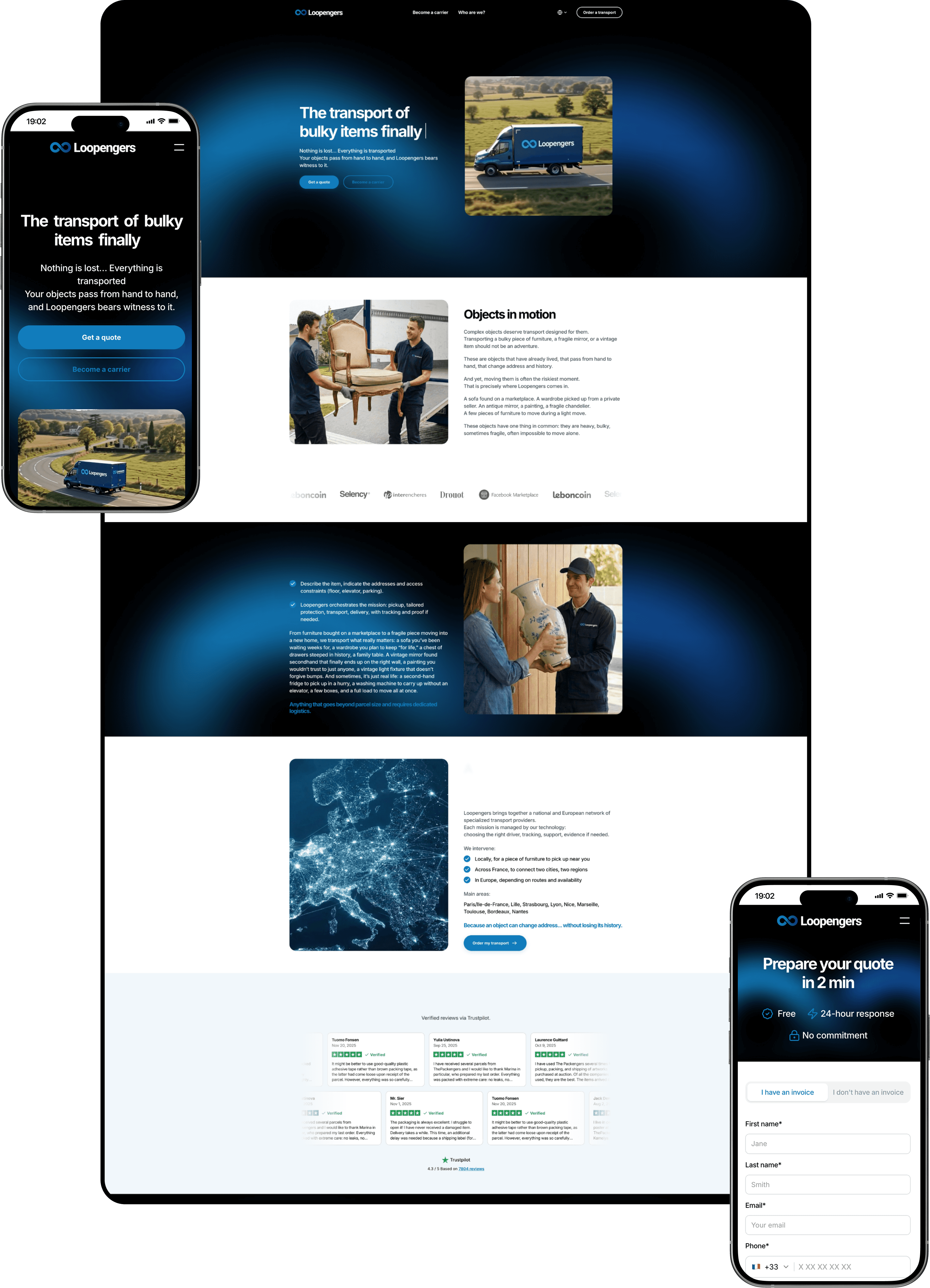
landing page deployed
A live carrier app powering Loopengers' promise of instant prices on complicated shipments — ~150 screens designed solo in 4 months, covering everything from first mission to final signature.
REFLECTION
What I learned
A technical specification tells you what needs to happen, but not how it should feel to the people using it. The more I worked through the GitHub spec, the more I realized every endpoint represented someone's task, decision, or problem to solve. Thinking in user journeys instead of system states helped turn engineering documentation into a product that felt coherent and usable.
What I'd do differently
If I could revisit the project, I'd spend time observing how logistics teams actually work before designing the experience. The specification gave me the business rules, but it couldn't capture the small realities of day-to-day operations. Seeing those firsthand would have helped me make better decisions around evidence capture, edge cases, and workflow efficiency much earlier in the process.
See Next Project

Redesigned the end-to-end quote experience, introduced AI-assisted package dimension capture, simplified user flows, and created a scalable design system.
View Project
View Project

Redesigned the website with stronger storytelling, clearer service hierarchy, modern UI, and improved navigation.
View Project
View Project